
Suno Just Entered Its Licensed Era — And AI Music May Never Be the Same
By Jalen Cross · 2026-09-18
Suno has launched its new v6 generation of AI music models alongside partnerships with Warner Music Group, BMG and Believe, signaling a major shift from AI music’s legal battles toward licensed participation and potential new revenue opportunities for artists.
Suno Is Moving Into a Different Phase
The AI music conversation changed significantly on September 9 when Suno launched its new v6 family of music-generation models, developed with music-industry partners including Warner Music Group, BMG and Believe. The rollout includes the flagship v6 model, the more experimental v6-Wild and a free v6-mini version available to all users.
That alone would be a major product update. What makes this release more important is what surrounds it. Suno spent much of the last few years battling questions over copyright, training data and whether AI music companies should be allowed to build products using commercial music without permission.
Now the company is trying to show what the next version of AI music could look like when labels, distributors and artists are actually part of the process.
From Lawsuits to Partnerships
Suno's relationship with the traditional music business has changed quickly. Warner Music Group previously sued the company over copyright allegations before the two sides reached a settlement and announced plans for licensed AI products. Suno later signed partnerships with BMG and Believe, bringing both major-rights holders and independent distribution networks into the conversation.
The Believe agreement is especially interesting for independent artists because it includes TuneCore, one of the most widely used self-release platforms. Believe and TuneCore artists and labels will be able to choose whether to participate in new licensed AI products developed with Suno. Participating creators are expected to have opportunities to be compensated when their work becomes part of those experiences.
That word—choose—may become one of the most important parts of the entire AI music debate.
For years, many artists felt AI was something being done to the music industry.
This model attempts to make artists participants instead.

What v6 Actually Changes
Suno says v6 offers more control over the music-generation process than its previous models. Users can make targeted edits to portions of songs, combine elements from multiple creations, work from text, audio, images or video, isolate and sample parts of tracks, and even change individual lyrics without rebuilding an entire song.
The company is also retiring its previous model generation and moving the platform completely onto v6.
That shows how quickly these tools are evolving. AI music is moving beyond typing a prompt and receiving a finished track. The software is beginning to look more like an interactive production environment where users can shape individual elements of a song.
For producers and independent artists, that could make AI less of a novelty and more of a regular studio tool.
The Bigger Story Is Artist Participation
The most important announcement may not be v6 itself.
Suno says it is developing future opt-in experiences built around individual artists, where artists can decide whether to participate and receive payment when they do.
Imagine a fan being able to interact with an officially licensed version of an artist's creative world rather than an unauthorized imitation.
Maybe they can remix approved material.
Maybe they can create something based on an artist's catalog.
Maybe an artist licenses certain vocals, sounds or creative elements specifically for AI interaction.
The exact products are still developing, but the business model is becoming clearer.
Instead of asking whether someone can imitate an artist without permission, the question becomes whether the artist wants to participate—and what that participation is worth.
That is a completely different conversation.
Independent Artists Could Have a Real Opportunity
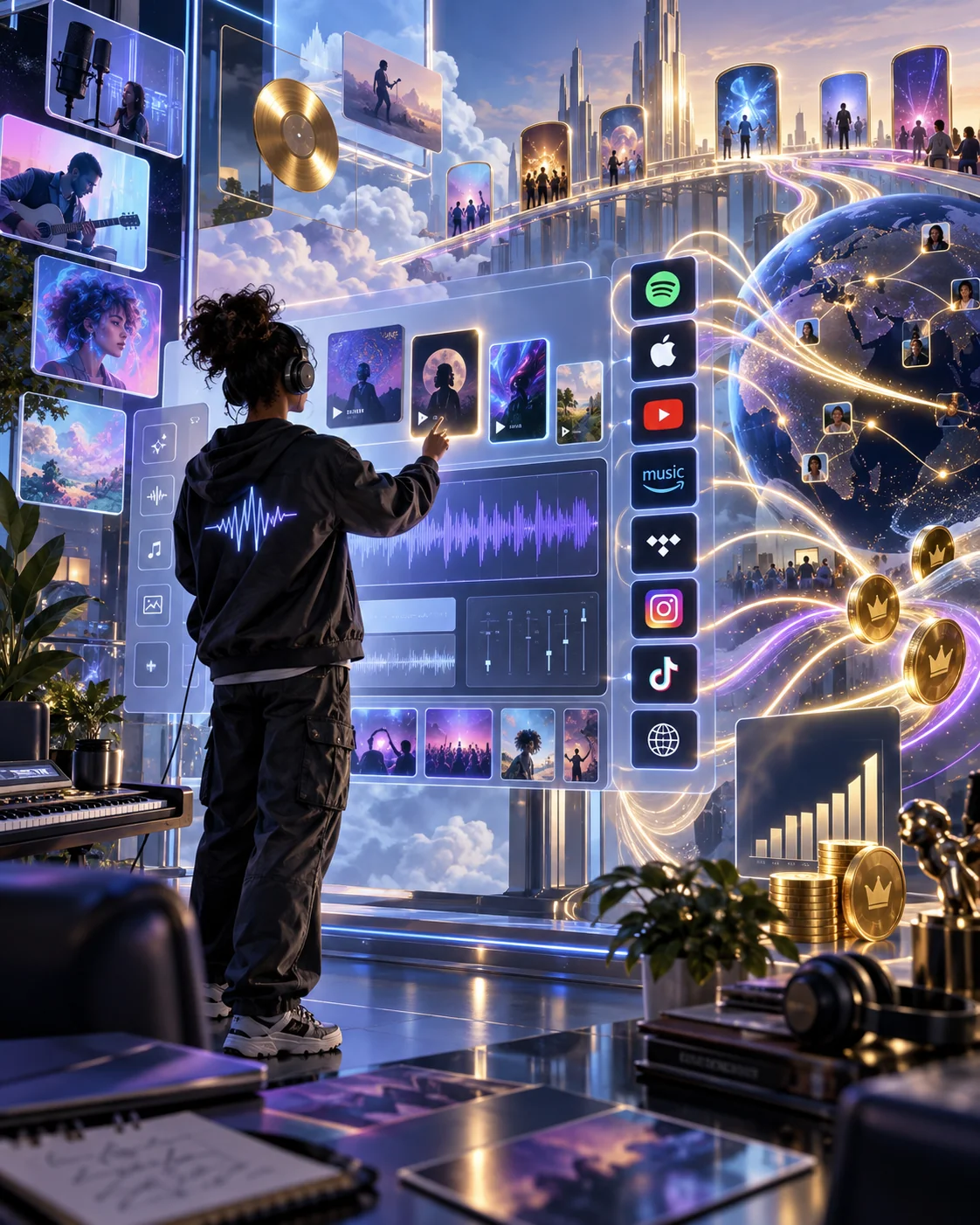
For independent artists, the Believe and TuneCore partnership is worth watching closely.
AI licensing has often sounded like something reserved for major-label catalogs and superstar artists. But including independent distribution platforms creates the possibility that smaller creators could participate in the same emerging economy.
That could create new revenue streams, but artists will still need to understand exactly what they are agreeing to.
What rights are being licensed?
How long does the agreement last?
Can an artist remove their music later?
How is compensation calculated?
Can an artist control how their name, voice or music is used?
Those questions become extremely important once AI moves from experimentation into commercial licensing.
Artists should not automatically fear these deals.
They also should not blindly click “accept.”
AI Music Is Becoming a Rights Business
This may be the biggest shift happening in AI music.
The early conversation focused heavily on technology.
How good can the songs sound?
Can AI create realistic vocals?
Can it make a hit?
Now the conversation is becoming much more familiar to anyone who understands the music business.
Licensing.
Rights.
Royalties.
Permission.
Ownership.
Distribution.
Compensation.
In other words, AI music is beginning to run into the same questions every other part of the music industry eventually faces:
Who owns what, and who gets paid?
That may actually be healthy for the technology.
If AI companies want long-term relationships with musicians, they need business models where the musicians see value too.
Where the Industry Goes From Here
Suno's v6 launch does not settle the debate over AI music. Artists will still disagree about whether generative music helps creativity or threatens it. Copyright disputes are not disappearing, and questions surrounding voice cloning, identity and authorship remain unresolved.
But this launch represents something important.
The music industry is no longer only trying to stop AI companies.
Parts of the industry are now actively helping build the products.
Warner Music Group, BMG and Believe are not standing outside the technology looking in. They are participating in how the next generation develops.
That means the future fight may not be AI versus the music industry.
It may be about which artists participate, what rights they license and how much value they receive in return.
For independent artists, that is the part worth watching.
AI music isn't disappearing.
It's becoming a business.
And once the business starts writing checks, everybody is going to want to understand the fine print.
Jalen Cross
TRACK WIRE | BTS Music Group
We Don't Follow the Map. We Change the Whole Route.
Comments (0)
No comments yet. Be the first to say something.